


Manual Plating Equipment
Manual Plating Equipment is a fundamental yet flexible electroplating solution where core process operations—such as workpiece loading/unloading, process start/stop, time control, and tank-to-tank transfer—are performed manually by an operator. The setup typically consists of a series of plating tanks (e.g., pre-treatment, plating, post-treatment), rectifier power supplies, and simple racks, featuring a straightforward structure and low investment cost.
Its key advantage lies in exceptional flexibility, allowing operators to adjust fixtures, positioning, and process parameters in real time based on the shape of different workpieces and specific requirements. However, the uniformity and efficiency of the plating quality largely depend on the operator's skill and experience, generally resulting in lower repeatability and consistency compared to automated systems.
Application Fields
This equipment is primarily suitable for small-batch, multi-variety production or R&D and prototyping scenarios.
Core Application Fields:
R&D & Laboratories: Used for developing new plating formulations, trial production of coating samples, and performance testing.
Tooling & Surface Treatment Workshops: Applied for restorative or functional plating (e.g., hard chromium plating) on small-batch workpieces such as molds and mechanical parts.
Precious Metal Plating: Used for small-scale, high-value gold, silver, and other precious metal plating in fields like jewelry, artwork, and electronic connectors.
Typical Scenarios:
Practical training and scientific research in universities and technical colleges.
Customized production of small-batch, non-standard products.
Capacity supplementation for existing automated production lines or special process handling.
With its low entry barrier and operational flexibility, manual plating equipment remains an indispensable tool in specific application scenarios.
Related Products
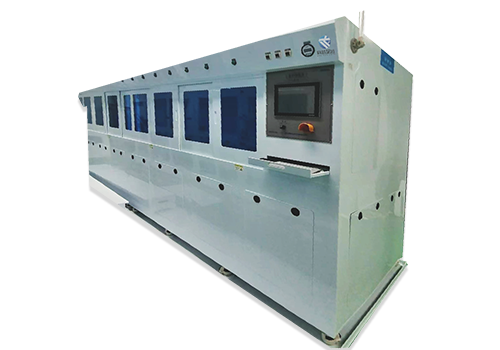
Manual Plating Equipment
Applications: R&D & Laboratories, Tooling & Surface Treatment Workshops, Precious Metal Plating

Glass Cleaning Machine
Applications: Semiconductor Manufacturing, Flat Panel Display, Photovoltaic Industry, Optical Components, Consumer Electronics & Home Appliances
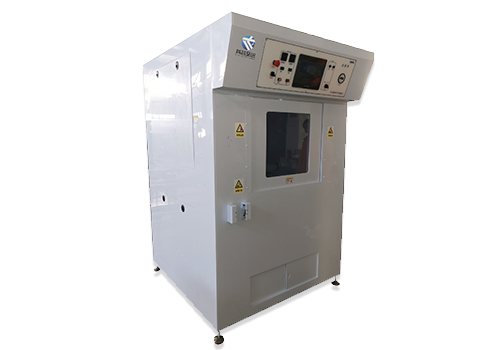
Trench Etching Machine
Power Devices, Advanced Memory, Micro-Electro-Mechanical Systems (MEMS)